

Project Case Studies
Click on the nonprofit's logo to read the full case study
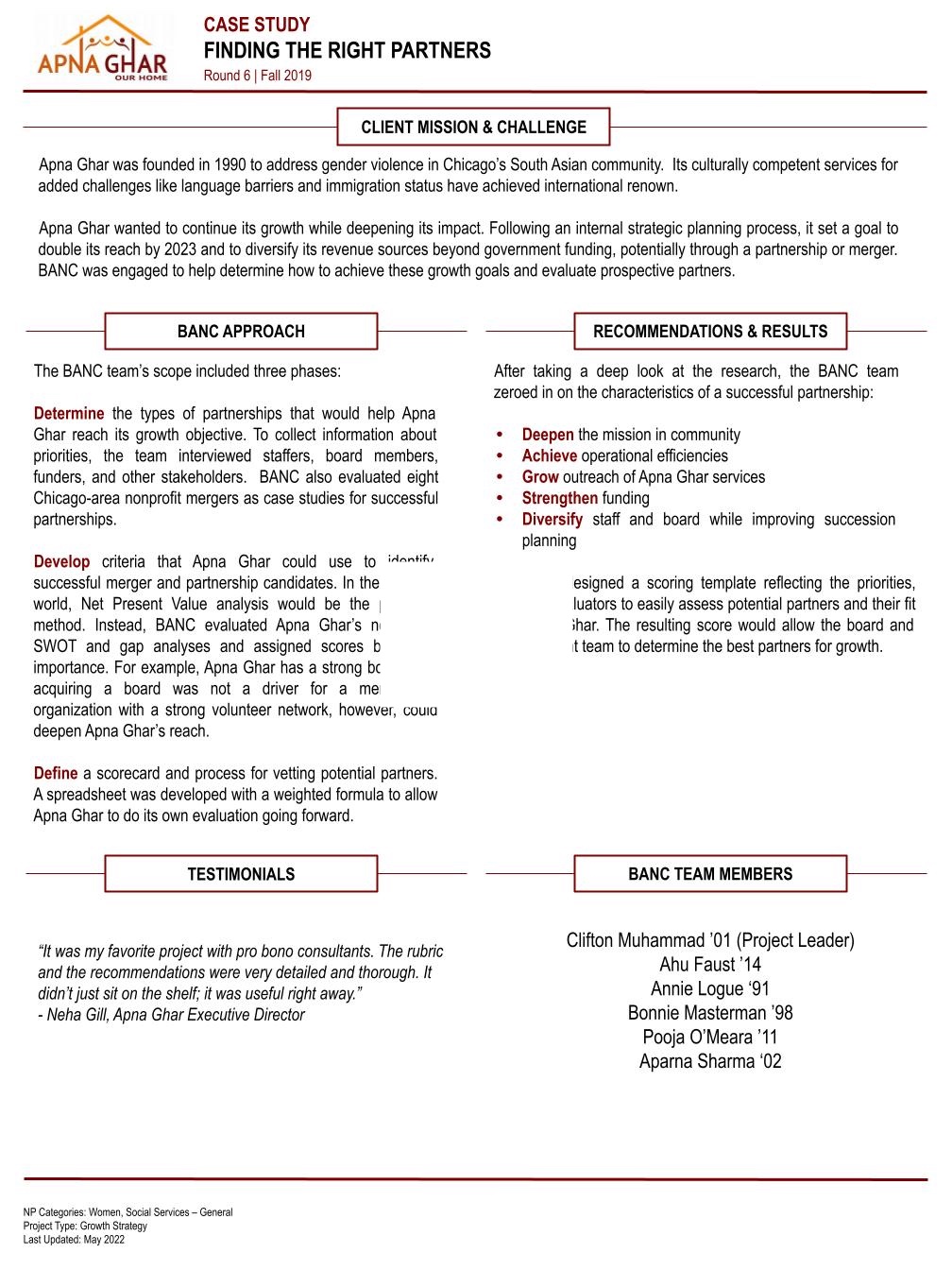
Apna Ghar’s executive director applied to BANC following an internal strategic planning process. Given the pervasiveness of gender violence, the staff and board wanted to double Apna Ghar’s reach by 2023 and diversify its revenue sources away from government funding. Secondary goals included gaining operating efficiencies and expanding the pool of potential board members to improve succession planning.
One way to meet Apna Ghar’s objectives would be through a strategic partnership, but what kind? Mergers, acquisitions, and other partnerships are becoming more common in the nonprofit sector.
A BANC team of seven consultants went to work with Apna Ghar in November 2019. The project scope had three parts. First, determine the types of partnerships that will help Apna Ghar reach its growth objective. Second, develop a list of criteria that Apna Ghar could use to identify successful merger and partnership candidates. Third, document a process for Apna Ghar’s leadership to identify and vet potential partnership and merger candidates.
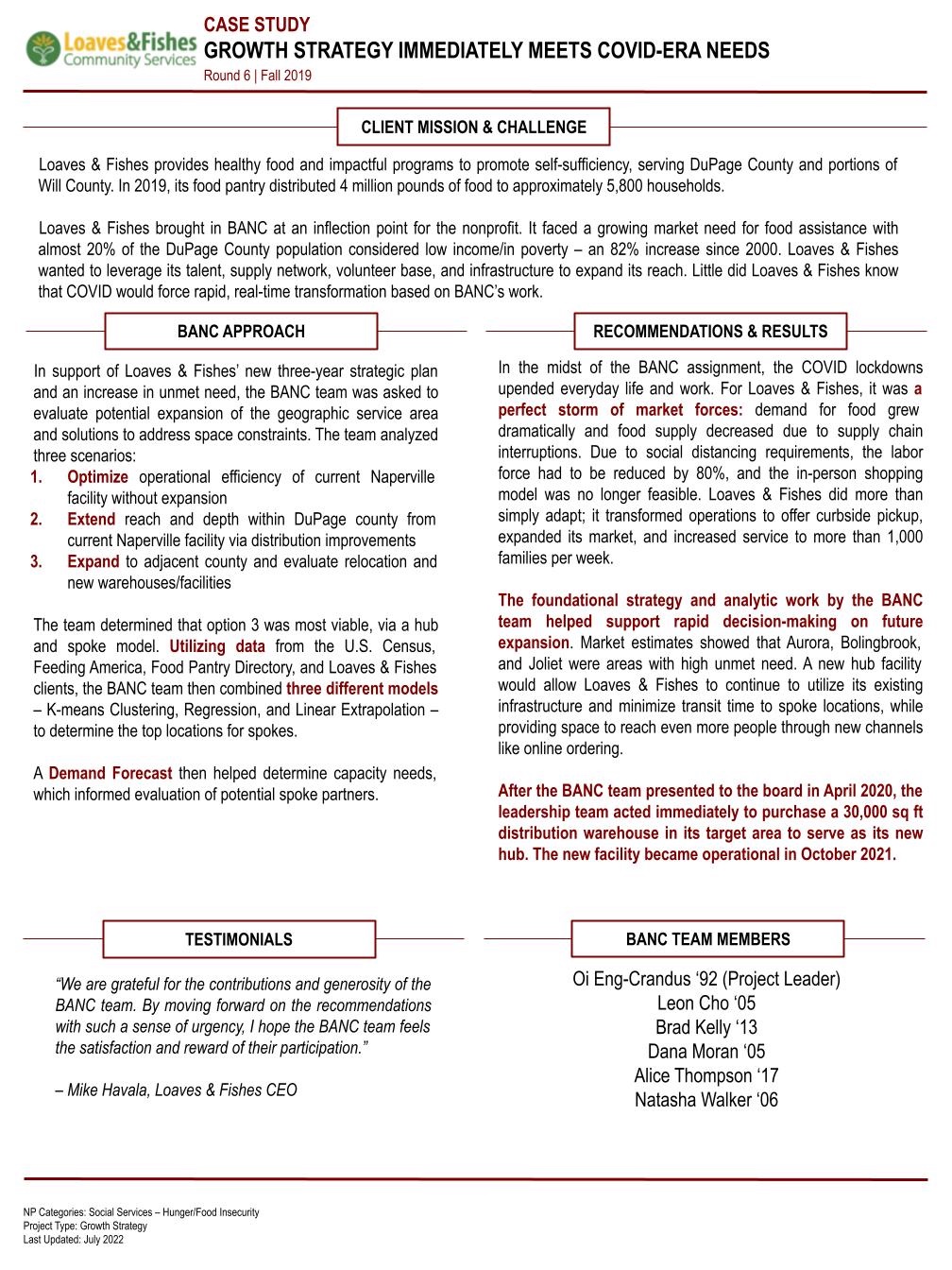
Loaves & Fishes provides healthy food and impactful programs to promote self-sufficiency, serving DuPage County and portions of Will County. In 2019, its food pantry distributed 4 million pounds of food to approximately 5,800 households.
Loaves & Fishes brought in BANC at an inflection point for the nonprofit. It faced a growing market need for food assistance with almost 20% of the DuPage County population considered low income/in poverty – an 82% increase since 2000. Loaves & Fishes wanted to leverage its talent, supply network, volunteer base, and infrastructure to expand its reach. Little did Loaves & Fishes know that COVID would force rapid, real-time transformation based on BANC’s work.
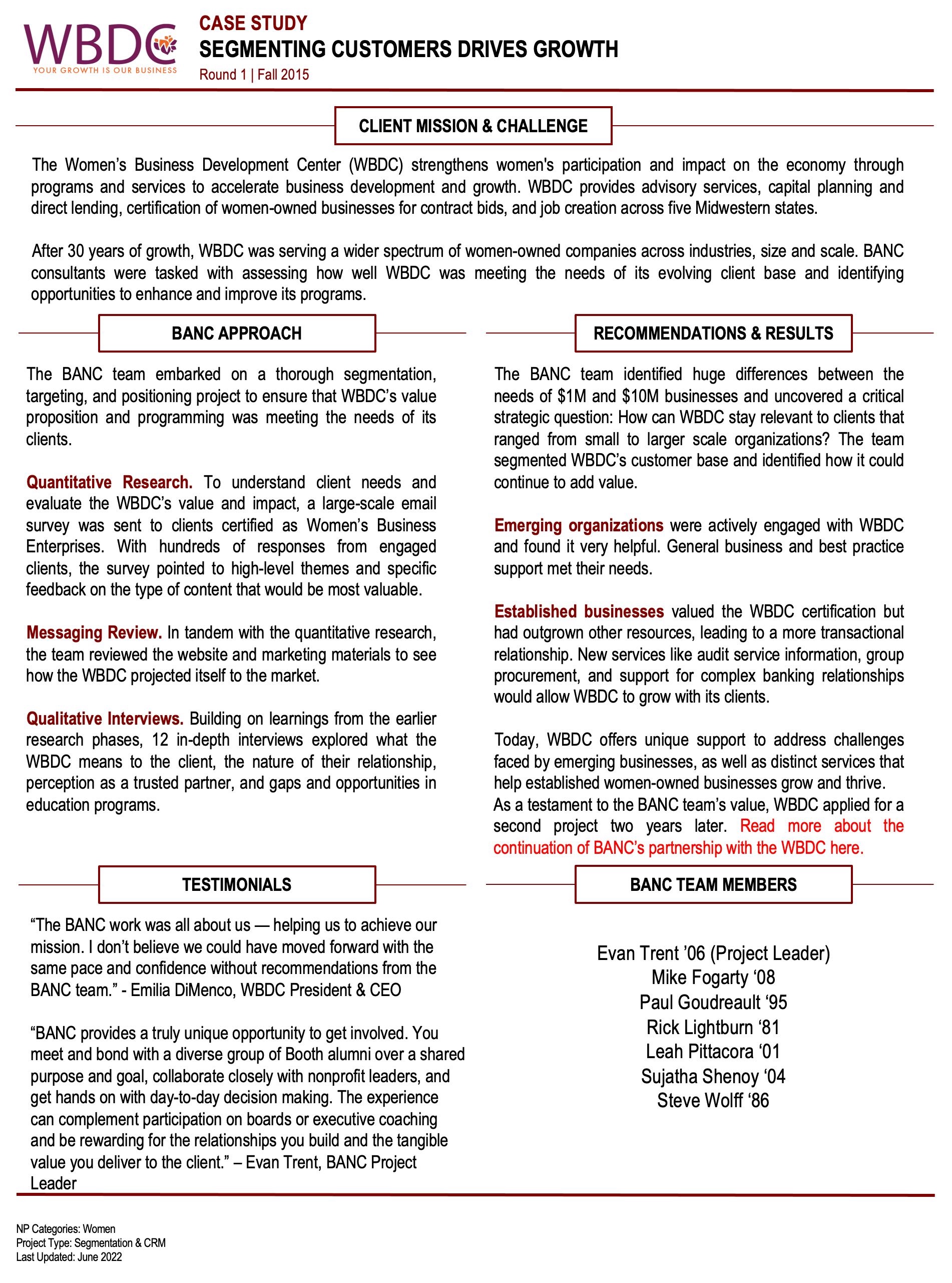
The Women’s Business Development Center (WBDC) strengthens women's participation and impact on the economy through programs and services to accelerate business development and growth. WBDC provides advisory services, capital planning and direct lending, certification of women-owned businesses for contract bids, and job creation across five Midwestern states.
After 30 years of growth, WBDC was serving a wider spectrum of women-owned companies across industries, size and scale. BANC consultants were tasked with assessing how well WBDC was meeting the needs of its evolving client base and identifying opportunities to enhance and improve its programs.
When she heard about BANC, the President & CEO at the WBDC recognized the potential value in the opportunity, and wasn’t daunted by being the first project. Working closely with the Chief of Staff, the duo came up with several ideas for projects. To optimize strategic alignment and fit for BANC, the team landed on a project that tapped into Booth strengths for market analysis and strategic thinking. BANC consultants were tasked to assess how well the WBDC was meeting the needs of their evolving client base, and identify opportunities to enhance and improve the WBDC’s programs.

Founded by a group of parents in 1985 as an affiliate of the National Alliance for Mental Illness (NAMI) advocacy organization, NAMI DuPage’s mission is to build a path to recovery for people impacted by mental illness by providing free and low-cost education, counseling, and support that is delivered by peers with lived experience.
To support a change in leadership and board, NAMI DuPage sought help with establishing a 3-5 year strategic plan. Then COVID-19 hit. NAMI DuPage needed to keep its staff safe and shift to virtual services to its existing members even as the impact of isolation, fear, and uncertainty of COVID-19 intensified the need for mental health support and overwhelmed mental healthcare systems.
At that time, the leadership team had already selected BANC for the work. The new Executive Director had worked with BANC at her former nonprofit and recommended that the board consider BANC. After exploring a few options, BANC was selected.
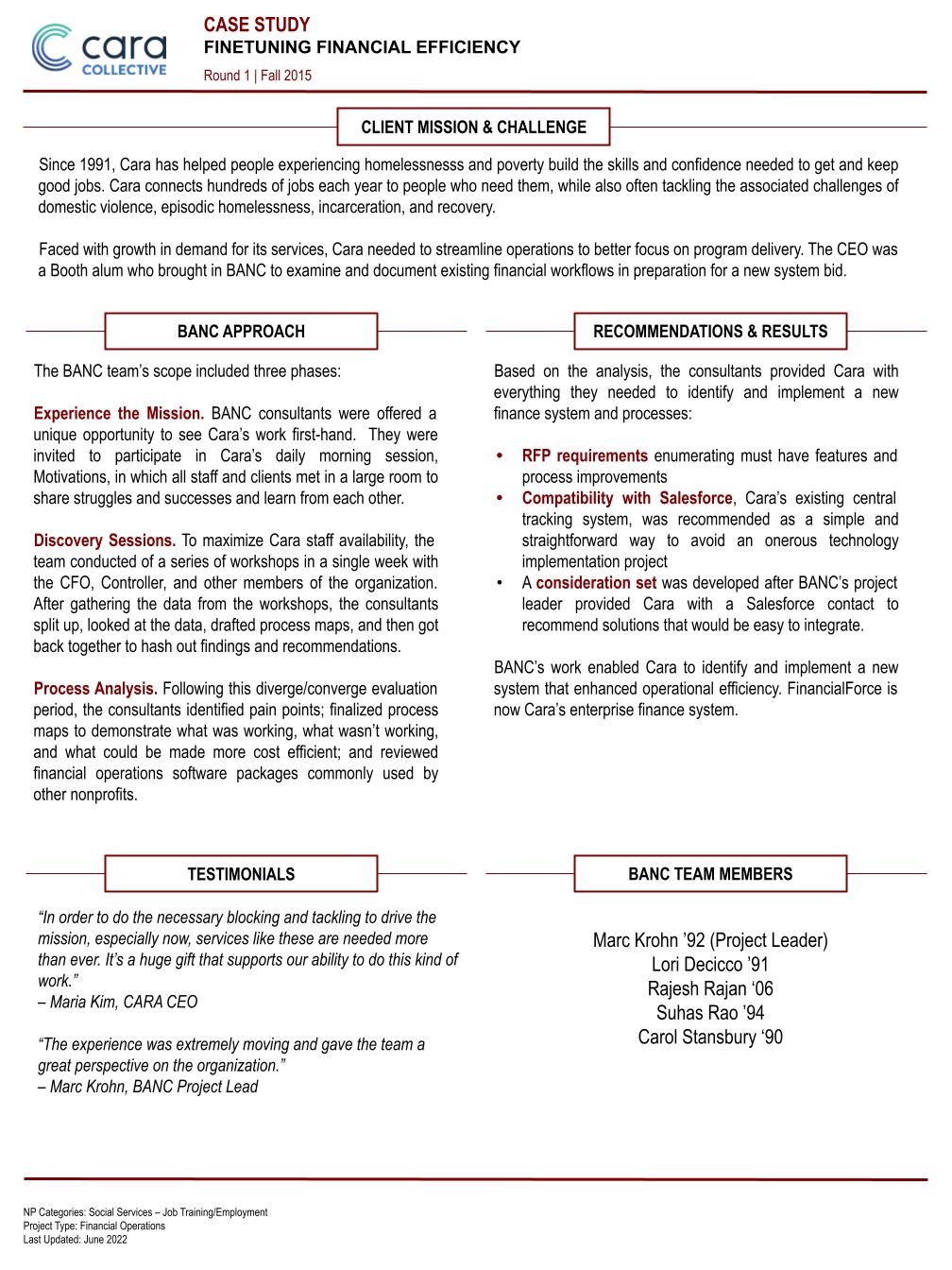
Since 1991, Cara has helped people experiencing homelessnesss and poverty build the skills and confidence needed to get and keep good jobs. Cara connects hundreds of jobs each year to people who need them, while also often tackling the associated challenges of domestic violence, episodic homelessness, incarceration, and recovery.
Faced with growth in demand for its services, Cara needed to streamline operations to better focus on program delivery. The CEO was a Booth alum who brought in BANC to examine and document existing financial workflows in preparation for a new system bid.
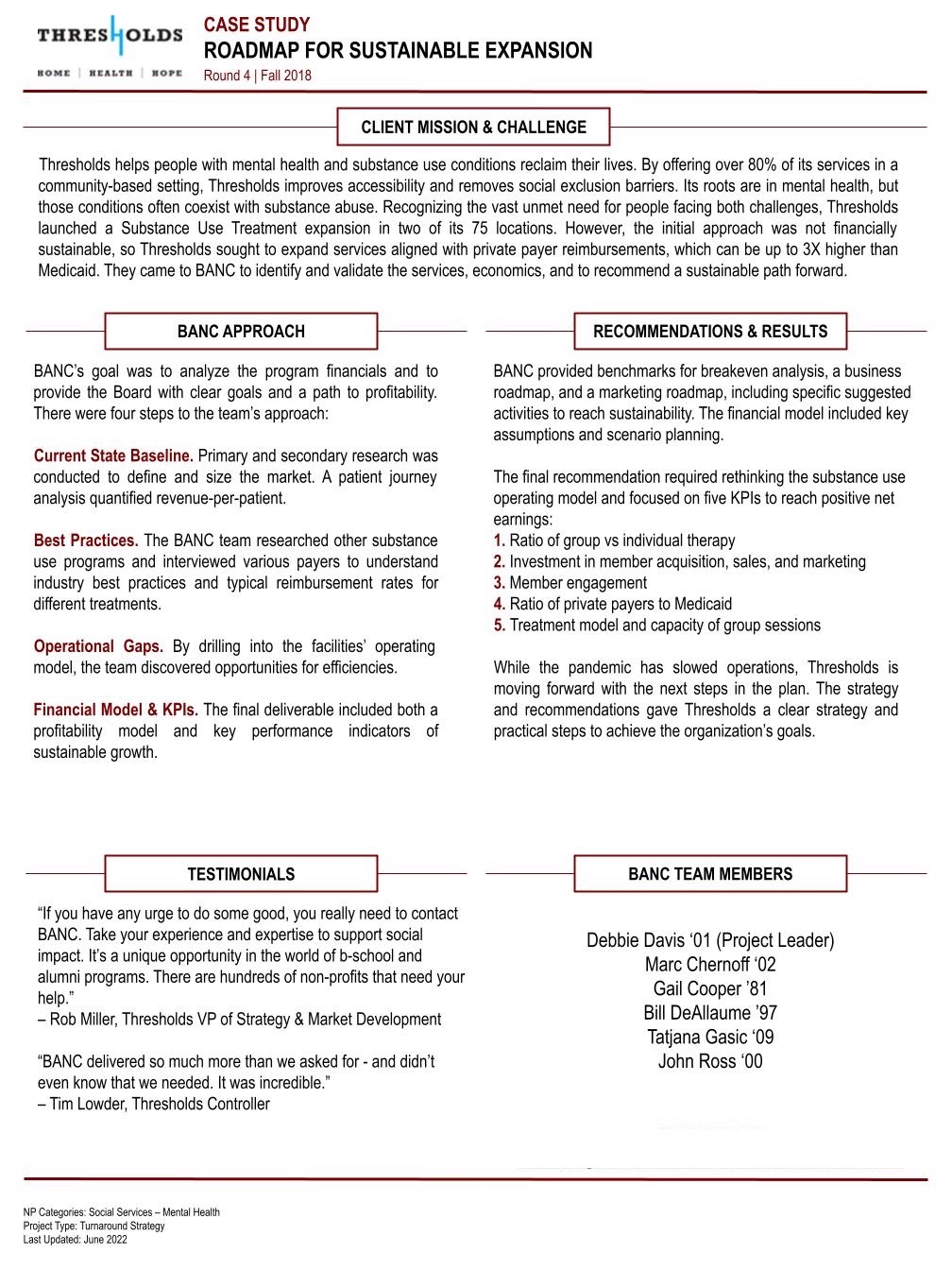
Thresholds’ roots are in supporting mental health. Since mental health and substance use conditions often coexist, they also offered some supplementary programs treating addiction. Recognizing the vast unmet need for people facing both challenges, after many years of consideration, Thresholds launched a Substance Use Treatment expansion in two locations, Blue Island and the west side of Chicago.
Having worked with BANC on a previous project, Threshold leaders knew the strength they could bring to the project. In 2018 Thresholds submitted a BANC application for help with a turnaround strategy for their Substance Use Treatment expansion. The Thresholds Controller became the project point person and helped the BANC team refine scope and gather data with ongoing team meetings.
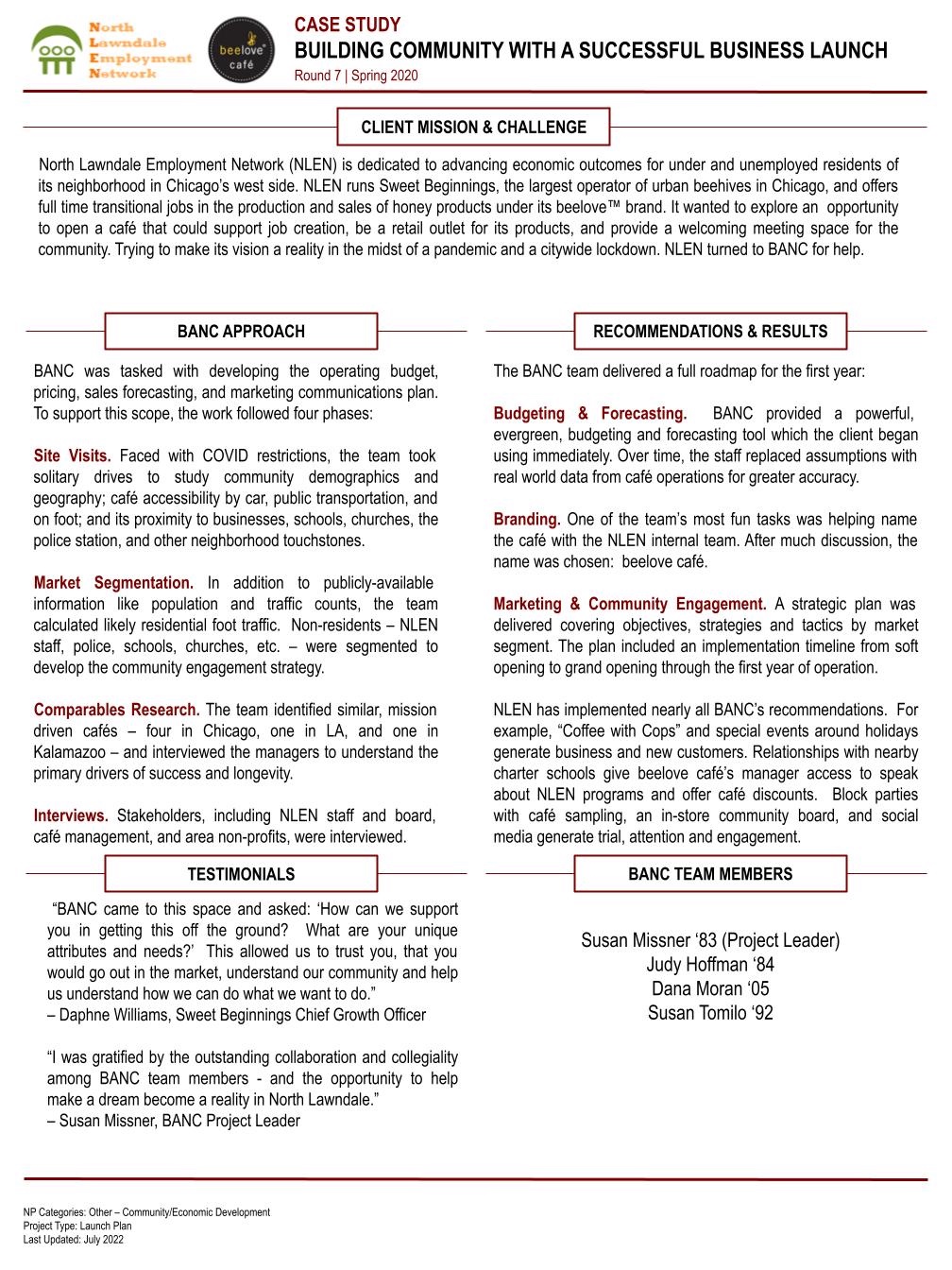
NLEN is dedicated to advancing economic outcomes for the under and unemployed residents of North Lawndale on Chicago’s West Side, including many clients returning from incarceration. NLEN runs Sweet Beginnings, the largest operator of urban beehives in Chicago, and offers full time transitional jobs in the production and sales of honey and honey infused products under its beelove™ brand. NLEN saw the opportunity to open a cafe when it started the process of bringing all its operations under one roof in Chicago’s historic Homan Square.
It’s always challenging to open a food and beverage outlet, even more so when you add in the vision of serving as a community hub in an underserved neighborhood while opening during a pandemic and a citywide lockdown. When the North Lawndale Employment Network (NLEN) decided to open its first ever cafe under those circumstances, they turned to BANC for help.It’s always challenging to open a food and beverage outlet, even more so when you add in the vision of serving as a community hub in an underserved neighborhood while opening during a pandemic and a citywide lockdown. When the North Lawndale Employment Network (NLEN) decided to open its first ever cafe under those circumstances, they turned to BANC for help.
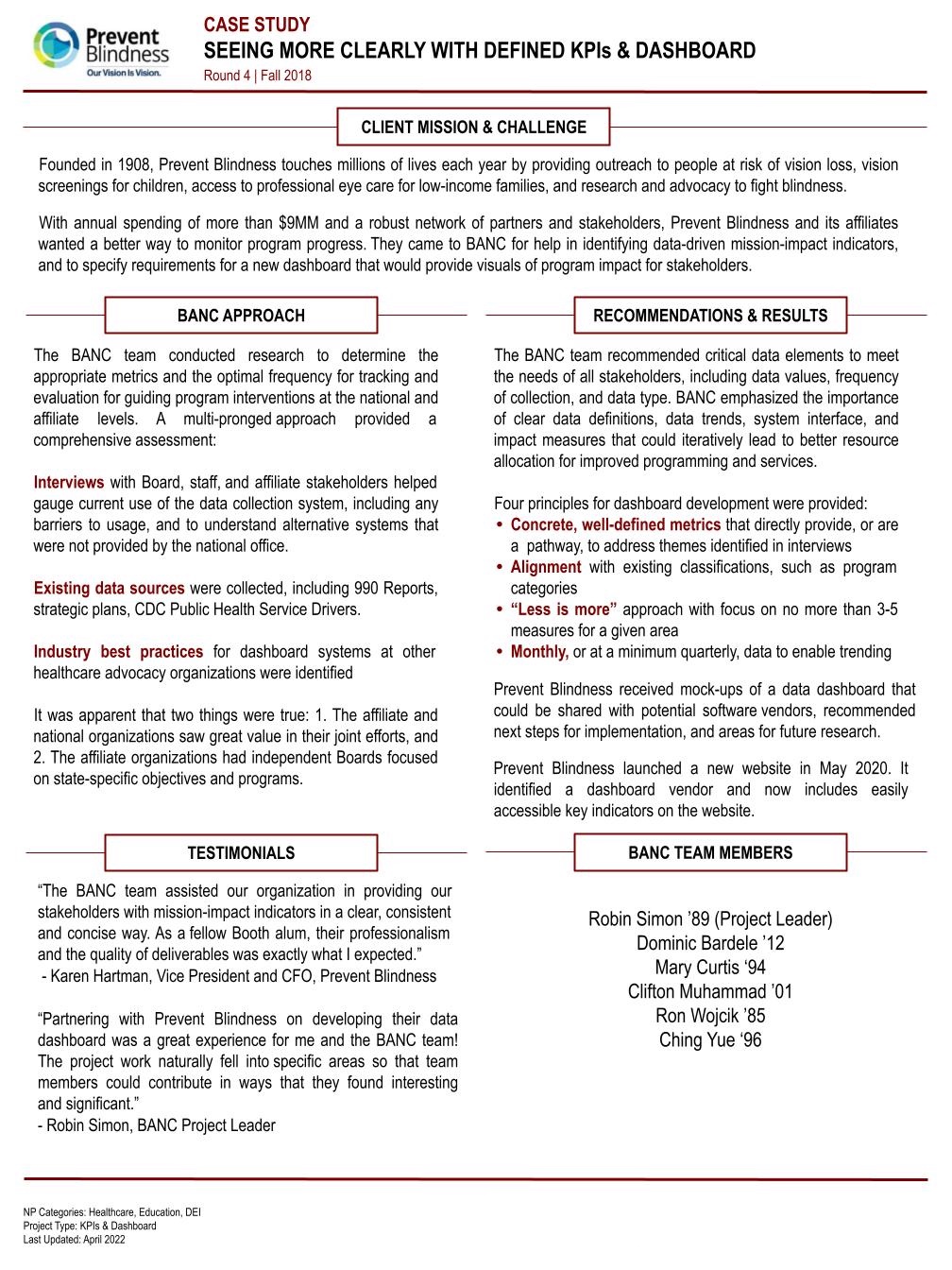
Founded in 1908, Prevent Blindness brings Americans to eye care, touching millions of lives each year providing outreach to people at the highest risk of vision loss, quality vision screenings for children, access to professional eye care for low income families, and ongoing research and advocacy to fight blindness and save sight. With annual spending of more than nine million dollars, a robust network of contributors, and a vast network of partners and stakeholders, Prevent Blindness and its affiliates sought a way to better capture and highlight high-level progress through data-driven metrics.
For an objective perspective and strategic expertise, Prevent Blindness sought help from BANC. The BANC team worked with the Vice President and CFO, and the Prevent Blindness national office and its affiliates to identify the most meaningful mission-impact indicators. The new data dashboard would provide a graphic snapshot of the growth and impact of programs to a variety of stakeholders. The primary objective was to provide an at-a-glance visualization of the indicators and other strategic data to quickly convey organizational status and priorities. The indicators are data-driven quantifiable measures that reflect the critical success factors of the organization.
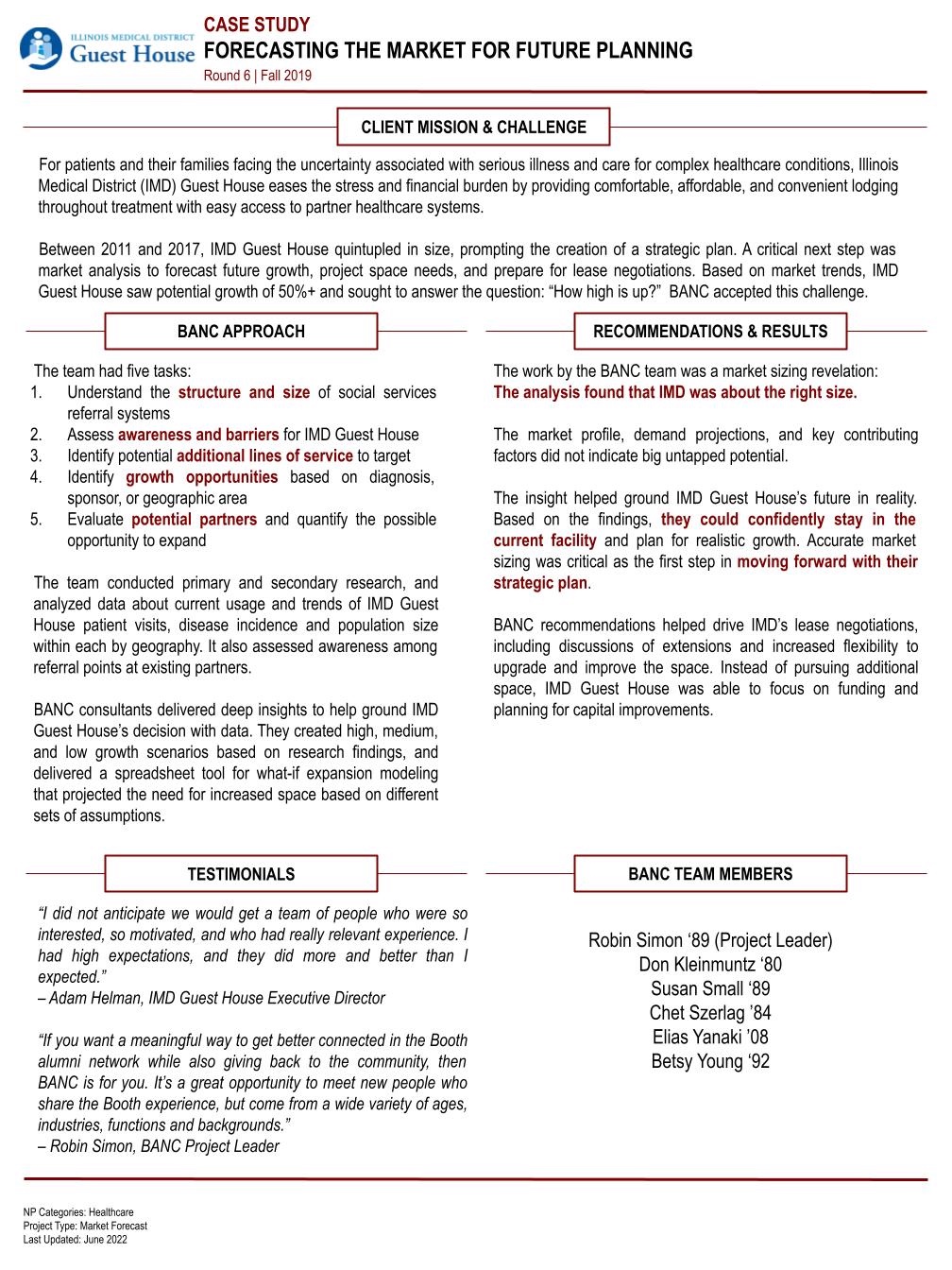
For patients and their families facing the uncertainty associated with serious illness and care for complex healthcare conditions, Illinois Medical District (IMD) Guest House eases the stress and financial burden by providing comfortable, affordable, and convenient lodging throughout treatment.
Between 2011 and 2017, IMD Guest House quintupled in size, which prompted creation of a strategic plan. The critical path for next steps required market analysis to validate and size opportunities for future growth. To project their space needs and prepare for lease negotiations in the next two years, they needed concrete expectations for the scale of the program. Did they have the right amount of space? Should it go up? Or were they overextended?
Since this was a fairly classic consulting project, IMD Guest House was optimistic they could secure pro-bono services. However, after striking out with project proposals from local MBA students, IMD Guest House’s Executive Director was concerned they would not be able to get it done. Then an email from the Rustandy Center at Chicago Booth highlighted another potential resource: BANC.The chance to secure a team of experienced consultants was an even better fit for IMD Guest House, so they submitted an application and were accepted for a BANC project.